Why Familiar Faces Change as We Grow Older
Why familiar faces change as we grow older: understand how features and expressions shift, and recognise the person without turning change into a standard.
The common mistake is to treat a changed face as a failed version of its earlier self. That can make an ordinary reunion feel like a test: you search for the old face, then mistake the effort of recognition for evidence that something is wrong. Why familiar faces change as we grow older is easier to understand when you separate shifting features from the expressions, habits and memories that help you recognise someone.
This is not a routine for correcting a face or deciding how anyone ought to age. It is a short, attentive way to notice what has changed and what remains familiar. Over a week, you can use a remembered image, a conversation and a few careful observations to make that distinction without turning ageing into a scorecard.
Day One: Choose A Memory
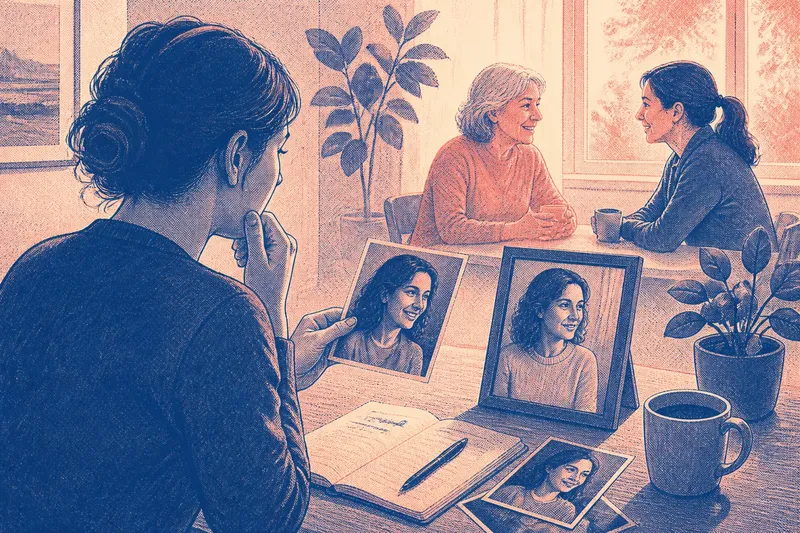
Start with one person you know well, or with your own face if that feels more comfortable. Choose a photograph you already have a reason to remember: perhaps a family snapshot, a portrait taken for a particular occasion, or an ordinary image that captures a familiar mood. The point is not to find the most flattering photograph. It is to give your memory something specific to compare with the present.
Look at the image briefly, then set it aside. Write down three details you associate with the person’s face, using plain descriptions rather than judgements. You might remember a quick upward lift at one corner of the mouth, brows that rise before a question, or a habit of looking aside while thinking. These are not measurements or fixed traits. They are small cues your attention may have stored alongside the person’s voice and manner.
If you choose yourself, use the same approach. Note how you tend to smile, where your eyes go when you listen, or what your face does when you are concentrating. Avoid turning the exercise into a catalogue of flaws. The purpose is to notice how identity is carried by movement as well as by a still image.
Day Two: Notice The Setting
Meet or speak with the person in an ordinary setting if an opportunity arises; there is no need to arrange a special encounter. Pay attention to the conditions around the face. Is the light coming from a window or from overhead? Is the person tired, laughing, distracted or speaking quietly? A familiar face can seem unexpectedly different when its expression or surroundings differ from the scene you remember.
Let recognition arrive without demanding that it happen instantly. A voice, a familiar phrase, a way of turning towards someone or a shared context may bring the person into focus. Facial recognition is not a single comparison between two frozen pictures. It draws on an assortment of cues, and some of those cues become clearer only as the interaction continues.
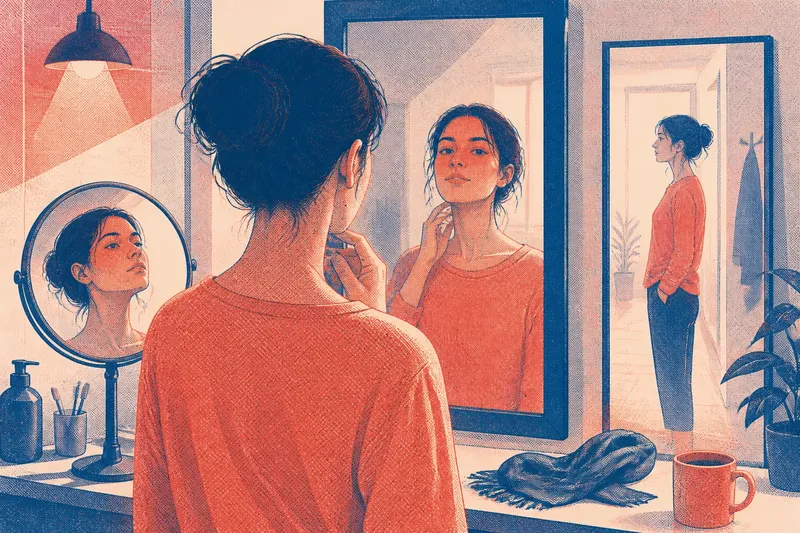
Do not make a point of staring or announcing each change you think you see. That can turn your attention into scrutiny and make the other person self-conscious. If you are looking at yourself, notice your face during a conversation rather than repeatedly inspecting it under different lights. The conditions are part of what you see.
Day Three: Compare Features Carefully
Return to your chosen image and consider broad, observable changes without assigning them a value. The outline of the face may look different; skin may show a different texture; hair may have changed in colour or fullness; the area around the eyes or mouth may appear unlike your memory. Such differences can have many influences, including ordinary ageing, expression, health, lighting and the way an image was made. A photograph cannot tell you which influence accounts for any particular change.
Try describing a difference without using words such as better, worse, tired-looking or youthful. “The cheeks seem fuller in the older image” is an observation. “The face has gone downhill” is a verdict built from a cultural preference. The first leaves room for uncertainty; the second quietly treats one appearance as the proper destination.
It is also possible for the comparison to feel uneven. You may know the newer face through repeated daily encounters but remember the earlier one as a single, clear image. Or you may have seen the person only occasionally, so each change arrives at once. That unevenness explains why a face can seem suddenly changed even when its appearance has shifted gradually.
Day Four: Follow Expressions
On the fourth day, turn from features at rest to expressions in motion. Recall how the person looks when amused, doubtful or intent. If you are with them, notice the sequence: a pause before a smile, a crease that appears during concentration, or a brief change around the eyes as they recognise someone. Expressions are not decorations placed over an unchanged face. They are part of the way a person is present to others.
Repeated expressions can also influence what a face seems to carry. Lines may become more visible in certain movements, while a familiar way of smiling can make a changed face feel immediately recognisable. This does not mean that every visible line records a particular emotion, or that a face can be read as a reliable biography. It means that memory often links a person’s appearance to the movements you have seen them make.
Imagine you have not seen an old friend since a photograph was taken years ago. At first, their hair and face shape seem unfamiliar. Then they laugh in the same breathless way you remember, tilt their head before replying, and use a familiar phrase. The expected observable result is not that their face looks as it once did; rather, several remembered cues make the person recognisable in their present appearance.
Day Five: Separate Memory From Image
On the fifth day, ask what your chosen image cannot preserve. A still photograph leaves out voice, timing, posture, touch, movement and the setting in which you first knew the person. Even a sequence of images cannot capture every ordinary encounter. Your mental picture is therefore not a neutral record against which the present must be judged. It is a selection shaped by attention and memory.
This matters when a face seems unfamiliar. You may be comparing the person with an image that has become unusually vivid because it belongs to a significant period. You may also be remembering how you felt at the time, not just what the person looked like. A reunion can bring back the atmosphere of an earlier relationship, so the difference between then and now can feel larger than the visible changes alone.
If you are reflecting on your own face, allow for the same effect. A remembered version of yourself may come from a particular photograph, role or stage of life. It is reasonable to feel surprise, fondness, discomfort or indifference when you notice change. None of those reactions establishes what your face should look like.
Day Six: Talk Without Judging
If a conversation naturally turns to change, speak from your own experience rather than presenting an assessment of someone else’s appearance. You might say that an old photograph brought back a memory of a shared place or a particular expression. That gives the other person room to respond without making their ageing the subject of unsolicited commentary.
Ask questions about the person’s life, not just their face. A story about a move, a friendship or a daily habit can restore the context that a photograph leaves out. This is not a way to avoid noticing appearance. It is a reminder that a familiar person is not reducible to the visible evidence of time.
For your own reflection, try describing the experience to someone you trust without asking them to rate your appearance. You could say that a photograph made you notice how your expression has changed, then explain what it brought to mind. The response may be a shared memory rather than a judgement, which can be a more useful way to hold the change.
Day Seven: Keep A Lighter Record
On the final day, decide whether you want to keep the note you made on the first day. You might add one present-day cue that you recognise, such as a characteristic smile or a familiar way of listening. Or you may prefer to put the note away. Either choice is enough; there is no need to create a continuing record or check for change on a schedule.
A brief record can help if you are exploring how memory and appearance interact. Keep it descriptive and private unless you have a reason to share it. Avoid assembling photographs into a before-and-after display that invites a verdict. The aim is to understand your response to change, not to make a case for or against a face.
It is not worth the effort to hunt for the one photograph that supposedly shows how someone “really” looks. A camera fixes one angle, moment and expression. Changing the light, lens or pose may change the impression without revealing a truer version. If a picture brings up a useful memory, keep that memory; do not ask the image to settle a question it cannot answer.
Questions About Familiar Faces?
Why can someone seem to change overnight?
People often see familiar faces in small, repeated encounters, while a reunion makes several changes noticeable at once. A different hairstyle, expression, setting or remembered image can add to the sense of sudden change.
Why do expressions matter for recognition?
Recognition draws on more than a face at rest. Familiar movements, such as a particular smile or way of looking up while listening, can connect a present face with memories of the person.
Can a photograph show what ageing caused?
A photograph can show a visible difference, but it cannot establish its cause. Lighting, angle, expression, image quality and changes in appearance all affect what a viewer sees.
Does a changed face mean someone is less recognisable?
Not necessarily. A person may look different in one feature yet remain familiar through expression, voice, movement and shared context. Recognition can also take a little time, especially after a long gap.
Notice Without Prescribing
Why familiar faces change as we grow older is a question about perception as much as appearance. Features shift, expressions continue to carry personal habits, and memory supplies connections that no photograph can contain. This week-long routine offers a way to notice those layers without turning them into a standard for how a person should look.
When a familiar face surprises you, give recognition time to gather its cues. Notice the expression, the voice and the shared context, then let the visible change remain a fact rather than a verdict. That small distinction can make an encounter more attentive without requiring anyone to welcome, explain or disguise the passage of time.