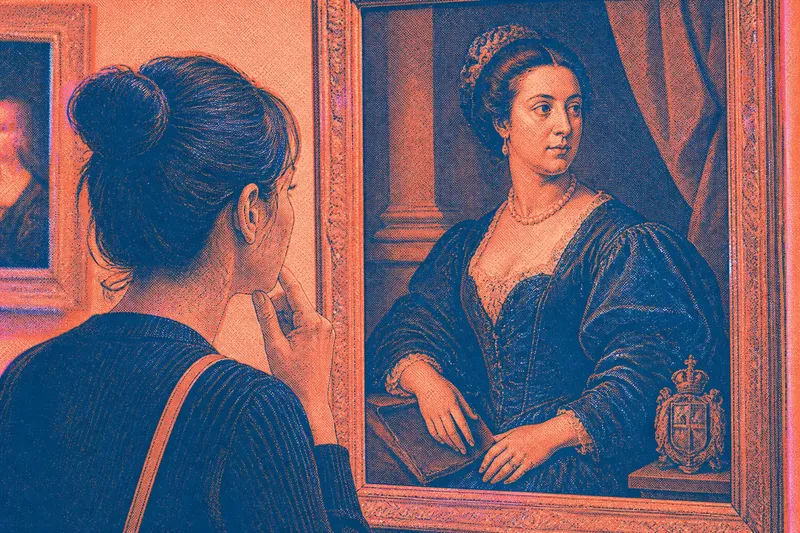
The Mirror Myth: Why One Glance Cannot Settle How You Look
The mirror myth turns one fleeting view into a verdict. See how angle, setting and attention shape your impression, and read the reflection with more perspective.

The most common mistake is treating a quick mirror glance as a verdict on your face; it can turn a passing impression into needless self-doubt. The mirror myth is the belief that one reflection settles how you look, when angle, setting and attention all shape what appears.
Angle changes the view
A mirror shows a view from one position, not a complete account of your appearance. Shift your head or move to one side and the light catches different planes: the bridge of your nose, the curve of a cheek, the edge of your jaw. The reflection changes because your viewpoint has changed, not because your face has suddenly become something else.
Distance matters, too. Close to a bathroom mirror, small details take up much of your field of view. A hallway mirror, seen from farther back, gives more context: your head, posture and clothing appear together. Neither view is the final one. Each answers a different visual question.
Mirrors also reverse the image from the orientation you are used to seeing in photographs. That unfamiliarity can draw attention to tiny differences between the two sides of your face. A slight asymmetry may seem striking in the reflection simply because you are inspecting it from an unusual angle or comparing it with a familiar reversed view.
Rooms set the tone
Light affects what you notice. A bathroom lit from above may cast shadows beneath the eyes or emphasise the texture of skin. A window facing you gives a softer, more even view. The reflection is not lying in either room; the light is revealing some features more strongly than others.
The surrounding space contributes to the impression. A fogged mirror, a busy counter or a dim corridor can make it harder to take in your whole appearance. A tidy fitting-room mirror may invite close attention to a garment, while a mirror by the front door may prompt a quick check of your overall outfit. These settings direct your gaze before you consciously decide what to inspect.
Context also includes what you were doing just before you looked. If you have hurried in from the rain, your attention may settle on damp hair or flushed cheeks. If you are checking a collar before leaving, those details are likely to lead instead. The room and the moment are part of the viewing conditions, not background noise.
Attention selects details
Looking is active. You may scan your face as a whole, or fix on one feature and treat it as the centre of the image. Once attention narrows, everything around that detail can fade. That can make a minor feature feel like the only thing the mirror contains.
Try naming what you are looking for before you look. “Is my scarf sitting flat?” directs attention to the scarf. “How do I look?” has no clear boundary, so it can invite an open-ended search for something to judge. This is not an appearance routine; it is a way to notice how a question steers perception.
Say you catch your reflection in a dark lift and dislike the tired look you see. You step into the lobby, where daylight falls across your face, and notice that your expression and features read differently. The useful observation is not that one of the mirrors was correct and the other wrong; it is that light, setting and your momentary focus shaped two impressions.
Reading a reflection?
Why does my face look different in each mirror?
Mirrors vary in position, size, lighting and surroundings, so they show different views. Your distance from the glass and the details you attend to also change the impression.
Is a mirror more accurate than a photograph?
They present different kinds of views. A mirror moves with you and reverses the familiar orientation, while a photograph fixes one camera angle, moment and lighting arrangement.
Why do I notice flaws when I look closely?
Close inspection gives small details more of your attention and less room for the rest of your face. A detail can feel unusually prominent without being the feature other people notice first.
Which mirror should I trust?
No single mirror can represent every angle, setting or expression. Treat a reflection as one view under particular conditions, rather than asking it to settle a broad judgement about your appearance.
Keep the judgement proportionate
If a reflection unsettles you, describe the conditions before drawing a conclusion: “The light is overhead,” or “I am standing close to the glass.” That small distinction separates what you can observe from the meaning you might attach to it. You do not need to argue yourself into liking the reflection; you can simply recognise its limits.
It is not worth chasing a perfect mirror, checking every angle or comparing each reflection with a photograph. That can turn an ordinary glance into an investigation with no clear stopping point. A practical response is to use the view for the specific thing you came to check, then return to what you were doing.
The mirror myth loses its force when you remember that a reflection is a view, not a verdict. Angle, setting and attention explain why your impression shifts, and they offer a steadier way to interpret what you see without prescribing how you should feel about it.