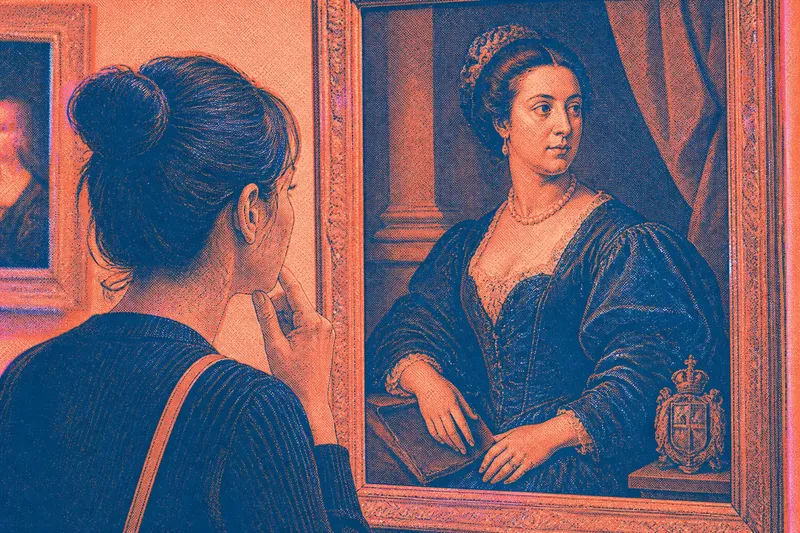
Personal Style or Dress Code: Two Different Ways to Get Dressed
Personal style or dress code? Learn how to read an occasion, choose what matters most, and make an outfit feel appropriate without losing your voice.
The most common mistake with personal style or a dress code is treating them as rivals: either dress exactly like yourself or disappear into the occasion. That can leave you uncomfortable, conspicuous for the wrong reason, or distracted from the people and purpose in front of you. A better approach is to decide what the setting asks of you, then choose how much of your own taste to bring into that frame.
Read the occasion
Before choosing clothes, name the occasion plainly. A work presentation, a family lunch, a wedding ceremony and an evening at a small music venue each come with different expectations. Those expectations may be formal, practical, cultural or simply familiar to the people attending.
Start with what you know rather than guessing from a vague label. Check the invitation, venue information or message from the host. If the wording is unclear, ask someone organising the event what guests are likely to wear. A direct question is often less awkward than arriving in an outfit that makes you feel exposed.
Then consider what you will actually do. Will you be sitting for a long time, walking between rooms, standing outdoors or moving around a crowded space? Clothing that suits the activity can matter as much as how formal the event looks. A polished outfit that prevents you from comfortably taking part is not serving you well.
Separate the two aims
Personal style is the pattern of choices you tend to make because they feel like yours. It might show up in colour, shape, texture, a favourite jacket, understated jewellery or the way you combine familiar pieces. It can change over time without needing to become a fixed identity or a test of consistency.
A dress code is a request or expectation tied to a particular setting. It may be explicit, such as “smart casual”, or understood through the event, venue and group. Its purpose is not necessarily to express who you are; it helps people share a social space without your clothing pulling attention away from what is happening.
One does not cancel the other. For a particular occasion, ask: What is the setting asking me to respect? Then ask: Which personal choices can I keep while meeting that expectation? The first answer sets the boundary; the second gives you room to choose.
Set your priority
Use these questions in order, before pulling clothes from the wardrobe:
- Is there an explicit requirement? If the invitation names formalwear, a uniform or a particular kind of footwear, treat that as the starting point.
- Would my outfit make participation harder? Consider weather, movement, seating and the length of the event.
- Would a more familiar choice help me feel present? A known shape or fabric may let you focus on the occasion instead of adjusting your clothes.
- Is standing out part of the event or likely to distract? A creative gathering may welcome an expressive choice; a solemn ceremony may call for restraint.
- Which detail matters most to me? Choose one or two features—perhaps colour, silhouette or an accessory—to carry your own taste into the outfit.
These questions are not a scoring system. They help you see which aim should lead. If the setting has a clear expectation, meet it first and express yourself in the remaining choices. If the setting is relaxed, your own preference can take up more space.
Build the outfit
Choose the most setting-appropriate piece first. For a formal event, that might be a suit, a tailored dress or another polished outfit that fits the invitation. For a casual gathering, it might be clean trousers and a top suited to the place. Start with the piece that determines the overall level of formality, rather than assembling accessories before you know the outfit’s direction.
Next, add personal details that do not undermine the occasion’s expectations. A familiar colour, a distinctive pair of earrings, a patterned scarf or a well-loved jacket can make a conventional outfit feel individual. If you prefer subtlety, the personal choice might be a texture or a particular way of wearing a simple piece.
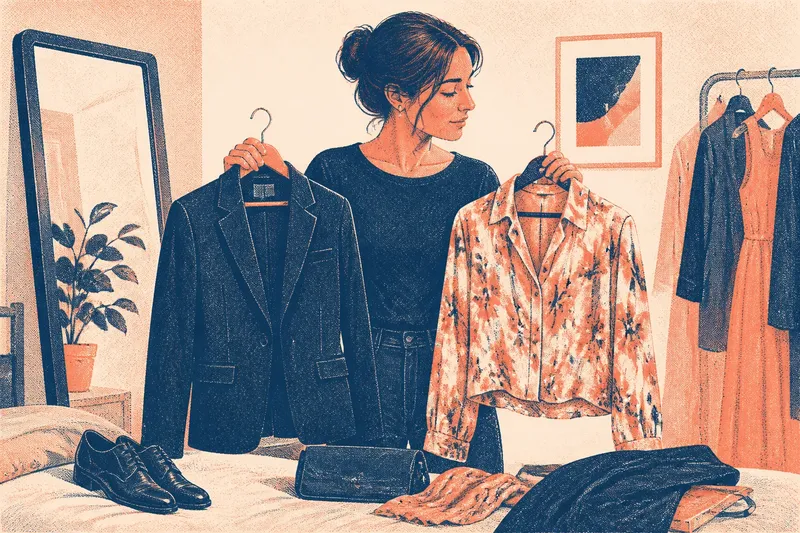
Imagine you have been invited to an evening reception described as formal, and your wardrobe includes a dark suit, a bright patterned shirt and simple leather shoes. You could wear the suit and shoes to meet the setting, then choose the shirt if the event’s tone leaves room for colour. The result keeps the formal outline while making the outfit recognisably your choice; if the invitation signals a restrained ceremony, a quieter shirt may fit better.
Try the complete outfit together, including the coat and bag you expect to carry. Check whether the layers work indoors and out, whether you can sit and move comfortably, and whether any accessory competes with the event’s tone. This is a practical check, not a demand to scrutinise your appearance.
When should each lead?
What if the invitation gives no dress code?
Use the venue, time of day and nature of the gathering as clues, then ask the host if uncertainty remains. Choose a considered outfit that is easy to adapt, such as a layer you can remove if the room feels more relaxed than expected.
Can personal style fit a formal event?
Yes. Keep the formality of the main outfit in view, then bring in your preferences through colour, cut, fabric or a restrained accessory. The aim is to feel like yourself without making the dress code the event’s main conversation.
What if the dress code feels unlike me?
Look for the least uncomfortable option that still respects the request, perhaps through a familiar colour or a shape you already enjoy wearing. If the request conflicts with a practical need or personal boundary, ask the organiser about an acceptable alternative rather than forcing a choice that does not work for you.
Should I dress like everyone else?
Not necessarily. Notice the general level of formality, but do not assume that every guest will interpret it identically. Use the setting as guidance, then choose the amount of visibility that feels right for this occasion.
Skip the extra fuss
It is rarely useful to build a whole new wardrobe for one invitation or to keep changing minor details after the outfit already fits the occasion. Settle the main choices, check comfort and practicality, then stop. The useful question is not whether the outfit expresses every part of you, but whether it lets you take part without feeling miscast.
For personal style or a dress code, the decision can be as simple as this: let the setting lead when it makes a clear request, and let your own taste lead where the setting leaves room. That balance can shift from one occasion to the next. Your clothes do not need to make the same argument every time you leave home.